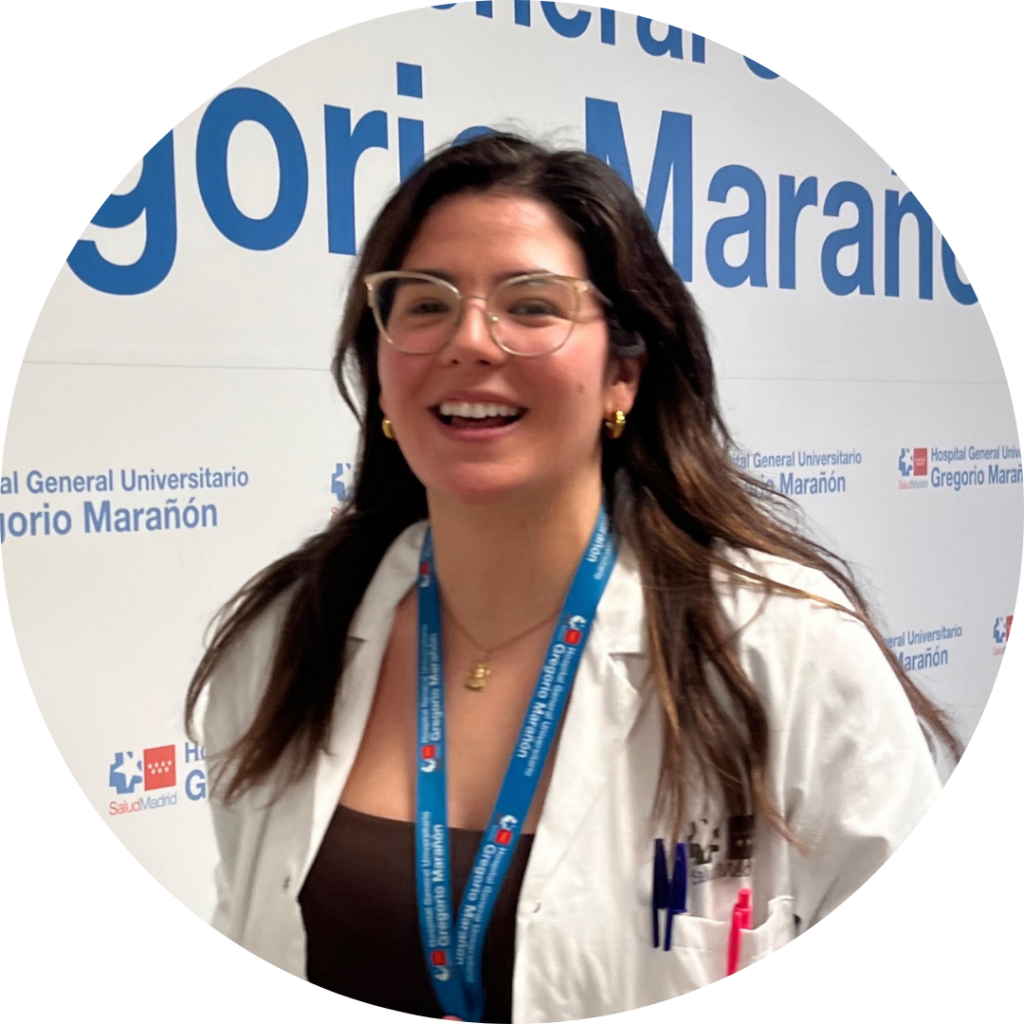
From Young Expert to Project Researcher: My Youth-GEMs journey!
It was the autumn of 2023. After the COVID-19 crisis, mental health had already started to be more present in the collective imagination; however, I did not consider entirely fair the idea that the responsibility for taking care of it (as well as the triggers of its distress) should fall exclusively on the individual plane. With this idea in mind, I decided to join the Madrid-based association Generación Kintsugi, a hub of people who seek collective solutions to mental health challenges with a focus on youth.
We used to meet frequently in cafés in Madrid, and in one of those meetings Irene Pujol, its founder, mentioned that for a year different European universities had agreed to develop a very promising project with the aim of bringing a little more clarity to what the determining factors are that influence the development of mental health problems. She also told us that the project’s approach was particularly innovative, not only because of the content of the research but also because of its methodology, since they were looking for young people with lived experience with whom to co-design the research.It seemed to me a fascinating opportunity, and as soon as I got home after the get-together I wrote an email to participate.
The selection process was relatively simple and, after a couple of interviews, I attended the so-called Sciences Cafes, the online meetings that brought together young people and researchers from the project. I remember those first meetings with special enthusiasm, because it seemed to me a tremendous success to include the voice of those about whom research is conducted, but I also felt deeply fortunate to be able to see from the inside the inner workings of a large-scale research project, as well as to be able to listen closely to and engage in dialogue with great experts; in addition to witnessing their willingness to make us part of it, it was without a doubt a gift.
One of the moments that I remember with special fondness (and that has probably been the vector that has brought me here) was a meeting I had with the researcher Mariël Kanne, a specialist in ethics, who was especially kind and receptive to the reflections and ideas that emerged during the conversation.
Today, two years later, I am very fortunate to be able to be part of the project from the other side, as a doctoral researcher, and together with one of my supervisors, Dorothee Horstkötter (whose research I admire), we carry out the ethical analysis of the narratives that reflect experiences of mental health (or mental illness), as well as of the healthcare received by young people in Europe.
Although the ethical analysis present in research (to which I devote a large part of my time as a researcher) is sometimes confused with the ethical approvals necessary to carry it out, it should be noted that these are two different ways of approaching ethical considerations. And, if you are interested in looking a little more deeply into what an ethical analysis consists of, I highly recommend reading the paper Self-control enhancement in children: Ethical and conceptual aspects[1], which Dorothee published a few years ago.
It has only been a few months since I started my PhD, but if there is one thing I have learned in these years in my role as a youth advisor for the Youth-GEMs project, and that I want to keep present every day as a researcher, it is the importance of placing the patient’s subjective experience at the centre, following the so-called person-centred model. I once heard Jorge Freire, a Spanish writer, say that philosophers are frustrated philologists, and I think he was somewhat right, since I always try to inquire into the etymology of words in order to articulate my reflections, and that of the word patient seems especially revealing to me.
Patient comes from the Latin patiens, patientis, which is the present participle of the verb pati (to suffer, to endure, to bear). The word patient therefore refers to the suffering of a person who requires patience, care, and accompaniment in order to continue being the agent of their life. And with the prudence and respect granted by the phenomenological gaze (shaped by the reading of fundamental figures such as Karl Jaspers), with my work I would like to contribute to tracing a path of light for all those young patients, and to remind them that they are not alone, that science, research, philosophy, and all the people who make them possible, are at their service and accompany them.
[1] Horstkötter, D. (2019). Self-Control Enhancement in Children: Ethical and Conceptual Aspects. In Shaping Children: Ethical and Social Questions that Arise when Enhancing the Young (pp. 25-41). Cham: Springer International Publishing.

Raquel López García
PhD Student | Department of Health, Ethics and Society
Faculty of Health Medicine and Life Sciences
Maastricht University