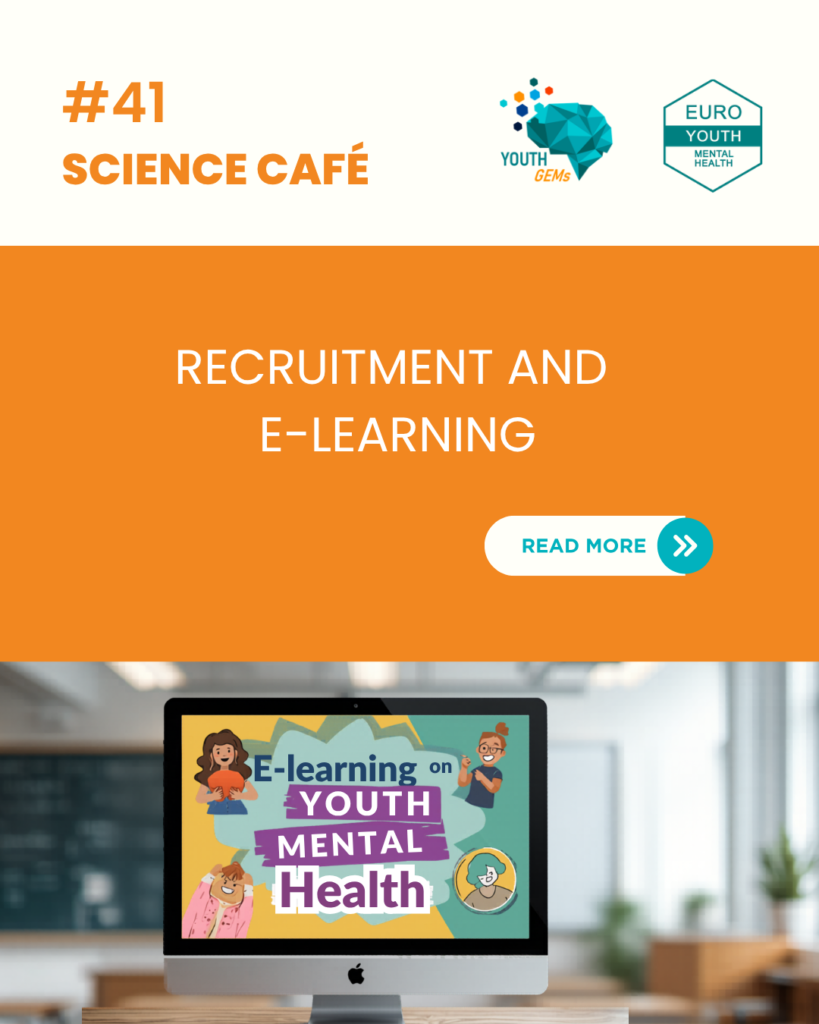
During Science Café 41, young experts once again played an important role in shaping the direction of Youth-GEMs. This session focused on two main topics: the recruitment of participants for the clinical study and the development of a new e-learning for parents and teachers.
Part I
Zjulie Rutten (PhD candidate at Maastricht University) shared an encouraging update about recruitment for the Dutch clinical study. Since presenting at Science Café 38, the number of young people willing to participate has doubled. She thanked the young experts for their earlier advice, especially the suggestion to give young people more choice in how they would like to be contacted. According to Zjulie, this seems to have made a real difference.
The team has also continued exploring new ways to reach young people, including through Instagram and a Dutch advertising platform that connects (young) people with research studies they may be interested in. A newsletter for participants is currently being developed as well, with the first edition expected in May.
At the same time, recruitment still comes with challenges. Many young people who express interest in the study unfortunately do not attend scheduled meetings. Zjulie asked the young experts for feedback on how this could be improved. Several practical suggestions were shared, including sending reminders closer to the appointment, having the researcher conducting the visit personally contact the participant the day before, and making it easier and less uncomfortable for young people to cancel if they cannot attend.
The group also discussed the importance of communicating without pressure and suggested that texting might feel more approachable than calling for some participants. Calendar invites and reminders through both email and text were also mentioned as helpful options.
Part II
The second half of the Science Café focused on the development of the Youth-GEMs e-learning for parents and teachers, presented by Isabella and Shanti, both students at Hogeschool Utrecht in the Netherlands. The idea for this e-learning originally came from discussions with young experts, who highlighted how important it is for adults around young people to better understand mental health challenges. The e-learning is currently being developed as a series of short modules, each focusing on topics that young experts, parents and teachers from different European countries considered most important. Lisette showed how earlier feedback from young experts had already been incorporated into the structure and content of the modules.
The group also reviewed part of a prototype module and gave feedback through Mentimeter. Young experts appreciated the use of visuals and especially responded positively to a video explaining the “window of tolerance” and how people may react differently to stress and anxiety. At the same time, they suggested reducing large blocks of text, adding more animations and interactive elements, and including clearer explanations and additional resources for further learning.
The discussion then moved into the content of future modules. Isabella asked for input on a module about recognising mental health challenges, leading to a conversation about the importance of trusted relationships, non-judgmental support and identity development during adolescence. Shanti, who is developing a module about diagnoses, asked whether young people think receiving a diagnosis is important. Most participants felt that diagnoses can help people feel understood and taken seriously, while also recognising possible disadvantages, such as stigma or feeling labelled by others.
Throughout the session, the young experts shared thoughtful reflections, practical advice and personal perspectives that directly contributed to the ongoing development of both the clinical study and the e-learning.