New Scientific Paper: Genetics and Environment Together Influence Psychotic Experiences in Teenagers
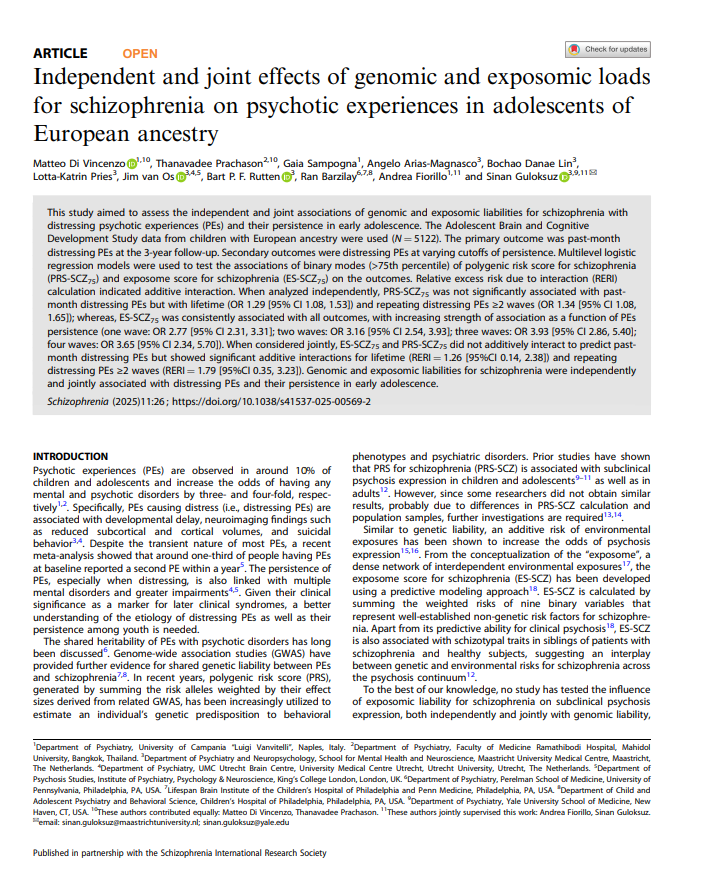
In a recent scientific paper, YOUTH-GEMs researchers, in collaboration with various institutions, explored the complex role of genetics and environment in contributing to psychotic experiences among teenagers.
This research aligns with the project’s broader mission: to understand how both genetic and environmental factors influence the mental health of young people aged 12-24. By promoting self-awareness, enabling early detection, and providing timely interventions, YOUTH-GEMs aims to reduce or prevent mental distress and improve long-term well-being.
What are psychotic experiences?
Psychotic experiences are mild symptoms of psychosis, such as feeling extremely suspicious, having unusual thoughts, or withdrawing from social interactions.
While potentially distressing, these symptoms are not severe or frequent enough to be diagnosed as a psychotic disorder. In fact, about 10% of teenagers experience these symptoms which typically go away on their own.
However, for some teens, these symptoms can persist, and when they do, it can increase the risk of developing more serious mental health conditions, like schizophrenia.
What was the study about?
In this study, researchers looked at how both genetic risk for schizophrenia and environmental factors affect distressing psychotic experiences in teenagers, both individually and combined.
The study used data from the Adolescent Brain and Cognitive Development (ABCD) Study, a large project following 12,000 teenagers across the U.S. For this specific analysis, the researchers focused on more than 5,000 teens of European ancestry to make sure they could accurately calculate the genetic risk.
To measure genetic risk for schizophrenia, researchers used the polygenic risk score for schizophrenia (PRS-SCZ), a risk meter that looks at multiple small genetic changes across a person’s DNA to estimate the likelihood of developing the condition.
To assess environmental risk factors, researchers used the exposome score for schizophrenia (ES-SCZ), which accounts for various environmental exposures that can influence mental health throughout a person’s life. To calculate this score, they considered nine factors: emotional neglect, physical neglect, emotional abuse, physical abuse, sexual abuse, cannabis use, birth during winter, hearing problems, and bullying.
Distressing psychotic experiences were evaluated using self-reported questionnaires administered at four different points in time.
What were the main findings?
The study found that both genetics and environmental factors are linked to distressing psychotic experiences. In other words, teens who have a higher genetic risk for schizophrenia, combined with harmful environmental exposures and life experiences (like bullying or abuse), are more likely to experience these mild symptoms.
What was especially important was that the link between environmental factors and these psychotic experiences was stronger when these experiences continued over time. If the symptoms persist over time, the risk of developing a more serious mental health disorder later on is likely to be increased.
What are the implications for the future?
This research presents important insights into the risk of developing persistent psychotic experiences and their potential progression into more severe mental health disorders in teenagers.
To reduce this risk, it’s crucial to focus on improving the environment for vulnerable teens—especially those who may be genetically predisposed to psychosis. Early intervention and targeted prevention strategies can significantly lower the chances of these mild symptoms escalating into more serious mental health issues, ultimately improving the long-term mental well-being of those at risk.
Youth-GEMs is proud to be committed to advancing research and developing strategies that promote better mental health in young people!
Read the full article 👉 https://www.nature.com/articles/s41537-025-00569-2