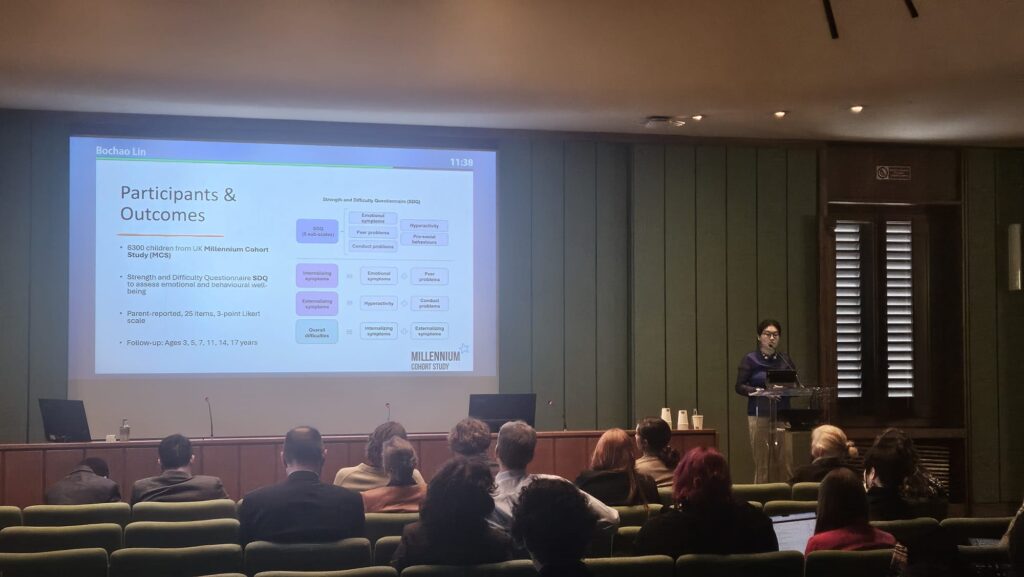
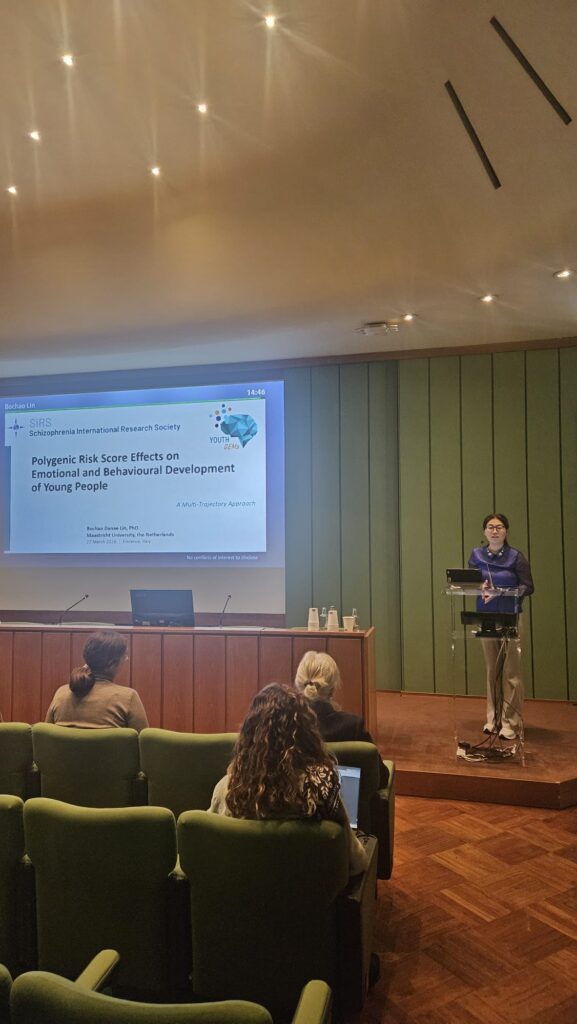
At the 2026 congress of the Schizophrenia International Research Society (SIRS), Bochao Lin, postdoctoral researcher at the Mental Health and Neuroscience Research Institute | Maastricht University, presented work from the Youth-GEMs consortium on how genetic risk may influence emotional and behavioural development in young people.
Bochao presented research examining how both shared genetic risk factors across mental health conditions, as well as more disorder-specific genetic influences, are related to different developmental patterns of psychopathology from childhood into adolescence. Using longitudinal cohort data and a multi-polygenic score approach, this work offers new insight into how broad, cross-cutting genetic vulnerability may shape mental health patterns early in life.
In simple terms, this research explores whether a young person’s genetic makeup may help explain why some children and teenagers develop emotional or behavioural difficulties over time, while others do not. Rather than focusing on just one diagnosis, the study looks at broader patterns across different mental health challenges and how these may unfold during development. The aim is to better understand early mental health trajectories, so that support and prevention can eventually become more timely and better tailored to young people’s needs.
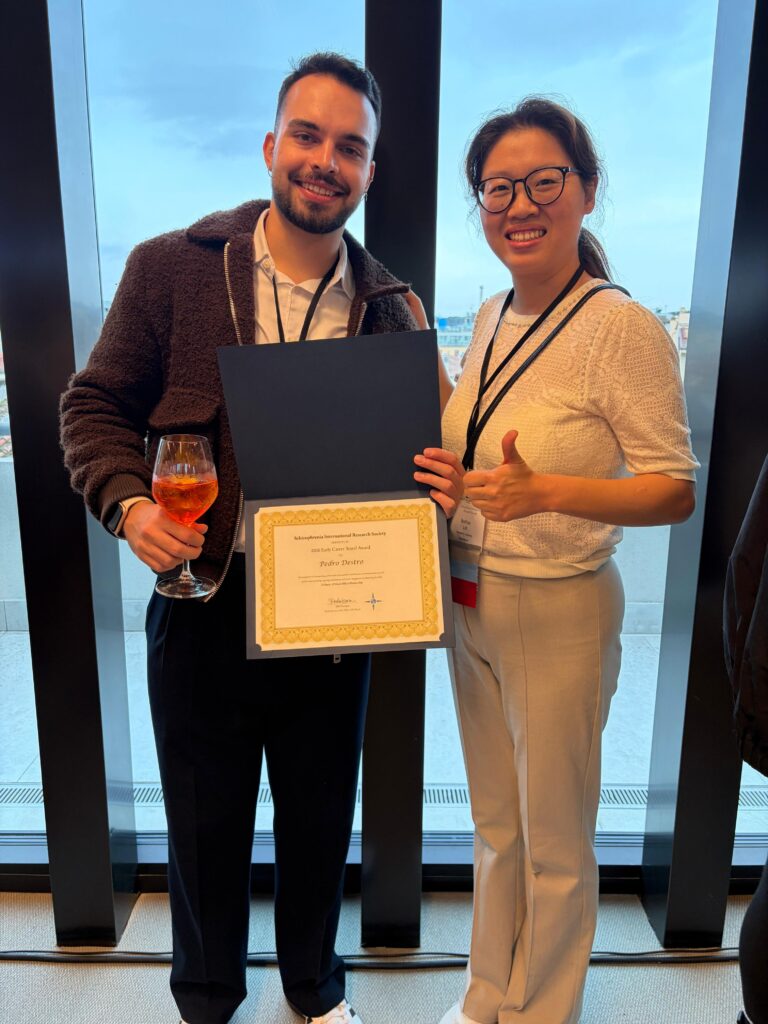
In addition to her presentation, Bochao also contributed to SIRS as a mentor for a travel award junior researcher. Her mentee, Pedro Destro, is a PhD student in Brazil whose research examines gene–environment interactions between genetic variants and cannabis use in shaping psychotic experiences in adolescents, which aligns closely with Bochao’s research interests.